With digital services becoming the foundation of business and everyday life, the question of "what is a data center and what does it mean" is no longer a highly specialized topic, but rather a basic understanding of infrastructure. Companies increasingly face the need to understand what a data center means, how it differs from a server room, and what tasks data centers solve. Growing data volumes and accessibility and security requirements make this topic not just relevant, but critically important: a clear understanding of what a data center is, in simple terms, directly impacts the choice of IT solutions, the resilience of services, and the ability of a business to scale without risk.
Contents:
- Data Center: Definition and Meaning of the Term
- What is a Data Center in Simple Terms
- Data Processing Centers: What They Do, Why They Are Needed, and Who Uses Them
- What is the Difference Between a Data Center and a Server Room?
- What a Data Center Consists of: Key Components
- Advantages: Why Choose Data Center Services
- Affordable Data Center Services in Moscow
- What Services Do Data Centers Provide?
- Who Works in a Data Center
- Types of Data Centers and Reliability Levels
- Historical Background
- Interesting Facts
Data Center: Definition and Meaning of the Term
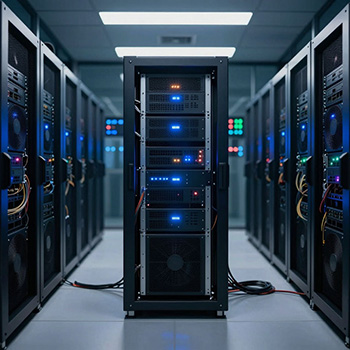
Data Center is a data processing center (buildings with IT infrastructure). They are not simply a place where information is stored, but a site where data is received, processed, transmitted, and stored with guaranteed availability.
Historically, the term developed as computing systems became more complex. While in the early stages of development, companies limited themselves to separate server rooms, as data volumes and reliability requirements grew, specialized systems capable of ensuring continuous information processing became necessary.
What is a data center in simple terms?
As you've probably already understood, a data center is a specialized facility designed to house servers and all the necessary infrastructure that ensures the storage, processing, and transmission of data. In simple terms, a data center is where the internet "lives": it's where the websites, applications, cloud services, and corporate systems we use every day operate. When a user opens a page in a browser, sends a message, or makes an online payment, the request is processed not "somewhere on the network," but on specific equipment installed in the data center.
Unlike traditional equipment rooms, such a center is designed from the outset as a stable and secure environment for the continuous operation of IT systems. It is equipped with redundant power supplies, cooling systems, communication channels, and physical security, ensuring the equipment operates 24/7 without interruption. So, to answer the question "what is a data center in simple terms," we can say: it's a reliable technological platform where computing power is concentrated, supporting digital services and data storage.
Data Centers: What They Do, Why They Are Needed, and Who Uses Them
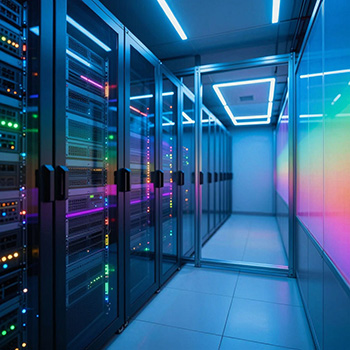
Data centers emerged as a response to the growing dependence of businesses and society on digital services. Today, virtually every online process—from loading a website to conducting a banking transaction—requires stable and fast server infrastructure. Deploying such equipment "on the fly" is no longer sufficient: conditions are needed that allow the equipment to function continuously, securely, and scalably. This is precisely the task that data centers solve. They provide:
- real-time processing and execution of user and business requests;
- data storage with guaranteed integrity and availability;
- 24/7 uninterrupted operation of websites, applications, and corporate systems;
- protection of information and infrastructure from failures, attacks, and external threats;
- data backup and recovery in case of disasters;
- scaling of computing resources to meet current and future workloads.
Essentially, data centers are where the following are hosted and stored:
- websites, web applications, and online services;
- corporate systems and company databases;
- user personal data and client information;
- backups and data archives;
- multimedia content: video, images, files;
- cloud services and virtual infrastructures.
However, these centers are used not only by large IT companies. The range of users is much wider:
- businesses of any size – from online stores to industrial enterprises;
- banks and financial institutions where operational stability is critical;
- military, government agencies, and municipal services;
- cloud providers and SaaS platforms;
- media, streaming, and gaming services.
Thus, a data center is the foundation on which the modern digital economy is built. Without it, neither the stable operation of websites and applications, nor the secure storage of information, nor the development of online services as such is possible.
What's the difference between a data center and a server room?
The difference between a data center and a server room isn't in the name, but in the level of infrastructure, reliability, and operational approach. A server room is typically a separate room within an office or building that houses the basic equipment needed by a specific company. A data center, on the other hand, is designed from the outset as a specialized facility, designed for the 24/7 operation of critical systems with specified fault-tolerance parameters.
The key differences can be summarized in a few fundamental points:
- Reliability and redundancy. A server room most often uses a single power source and limited redundancy. A data center has redundancy for all critical systems: power supply, cooling, and networks (N+1, 2N, and higher).
- Engineering infrastructure. A server room typically includes air conditioning and basic electrical equipment. The data center uses industrial cooling systems, UPS, diesel generators, and structured cabling systems.
- Availability Level. The server room allows for downtime during emergencies or maintenance. The data center ensures continuous operation 24/7 with minimal risk of outages.
- Security. In the server room, this is most often a lock on the door. The data center has a multi-level system: access control, video surveillance, security, and access zones.
- Scalability. The server room is limited by the area and capacity of the building. The data center allows for flexible resource expansion without restructuring the infrastructure.
- Purpose. The server room serves the internal needs of a single company. A data center can operate for a single organization or provide colocation and cloud services to multiple clients.
Essentially, a server room is an on-premises and limited solution, while a data center is an industry standard for IT infrastructure hosting, guaranteeing stability, security, and scalability.
What a Data Center Consists of: Key Components
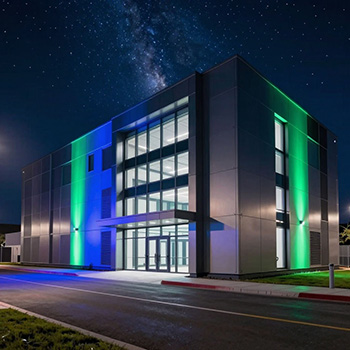
A data center is more than just a room full of servers, but a complex of interconnected engineering and IT systems, each responsible for the stable and continuous operation of the equipment. Data center reliability is achieved through a well-thought-out architecture, where there are no "secondary" elements—the failure of any one of them could impact service availability.
Key components of a data center include:
- Server and telecommunications equipment. This is the computing component: servers, data storage systems (DSS), and network devices that directly process and transmit information.
- Power supply system. Includes external inputs, uninterruptible power supplies (UPS), batteries, and diesel generators. In fault-tolerant configurations, the power supply is fully redundant.
- Cooling systems. Industrial air conditioners, chillers, and air distribution systems maintain optimal temperature and humidity for equipment operation.
- Network infrastructure. Communication channels, routers, switches, and traffic exchange points ensure high-speed and stable data transfer.
- Physical security. Access control, video surveillance, security, fire detection and extinguishing systems (usually gas, which are safe for equipment).
- Engineering and support infrastructure. This includes monitoring and dispatching systems, cable routes, as well as staff and maintenance areas.
In high-end centers that meet strict fault-tolerance standards (e.g., Tier III–IV), the infrastructure extends beyond the server rooms. Separate areas are provided for backup systems, storage facilities, convenient access roads, and even parking for rapid access by engineering teams and equipment delivery. This isn't a formality, but rather part of the overall logistics that allows for a rapid response to any incidents and maintains the center's uninterrupted operation.
Thus, a data center is an integrated ecosystem where computing power is tightly linked to the engineering base, and it is this connection that ensures the reliability that drives companies to move their infrastructure outside of traditional server rooms.
Advantages: Why Choose Data Center Services
Choosing a data center is typically not a matter of convenience, but a rational decision that balances risks, costs, and stability requirements. As the workload and criticality of services grows, companies find that their own server room no longer meets the required level of reliability and flexibility.
The key advantages of using a data center can be summarized as follows:
- Reliability and fault tolerance. The infrastructure is designed from the outset with redundancy for all critical systems, minimizing the likelihood of downtime.
- Financial predictability. Instead of large capital investments in construction and equipment, the company receives a clear operating expense model.
- Security. Multi-layered protection includes both physical measures and organizational processes unattainable with most on-premises solutions.
- Scalability. The ability to quickly increase capacity without rebuilding the infrastructure or interrupting services.
- Professional operation. A specialized team, working in real-time, monitors the condition of equipment and engineering systems. 24/7.
- Connection quality. Access to multiple operators and traffic exchange points ensures stable and fast data transfer.
As a result, using a data center allows businesses to focus on their tasks, transferring infrastructure issues to an environment where they are resolved at an industrial level and with predictable results.
Affordable data center services in Moscow

If you're looking for affordable data centers in Moscow without compromising on quality, hosting your infrastructure in the Safeharbor data center is a smart solution. This is an option for those who want a stable platform for their services without the extra costs of maintaining their own server and engineering infrastructure.
Safeharbor emphasizes practical convenience: quick access to equipment, clear colocation terms, and the ability to flexibly scale resources as your needs grow. You don't need to maintain an in-house team—most technical operations can be delegated to data center specialists.
We place special emphasis on remote hands-on support: on-site engineers perform physical equipment maintenance at your request, from simple server reboots to component replacements and switching. This saves time, reduces operating costs, and allows you to manage your infrastructure remotely, without constant visits to the data center.
As a result, you receive not just server space, but a ready-made working environment where technical issues are resolved quickly and without unnecessary bureaucracy, and the infrastructure remains accessible and manageable at any time.
What services do data centers provide?
Data centers provide not only infrastructure but also a wide range of services that allow companies to build and scale IT systems without investing in their own capacity. Depending on their needs, businesses can use both basic colocation options and comprehensive turnkey solutions.
The main data center services include:
- Colocation — renting rack space or a separate rack for installing your own server equipment with access to power, cooling, and communication channels.
- Dedicated Server (VDS) — providing a ready-made physical server for rent without the need to purchase equipment.
- Virtual Servers (VPS / Shared Hosting) — dividing physical resources into several virtual machines with flexible configuration based on the client's needs.
- Cloud Infrastructure (Cloud / IaaS) — scalable resources on-demand, not tied to specific hardware.
- Backup — creating and storing copies of data to protect against loss and quickly restore.
- Disaster Recovery — organizing backup sites and recovery scenarios IT systems during failures.
- Remote Hands — performing technical operations on equipment by data center specialists without the client's physical presence.
- Network services (IP Transit, Cross-connect) — connecting to the internet, organizing communication channels, and interacting with other operators.
Thus, a data center is not just a place for servers, but a full-fledged service platform that covers both basic and complex business infrastructure tasks.
Who Works in a Data Center
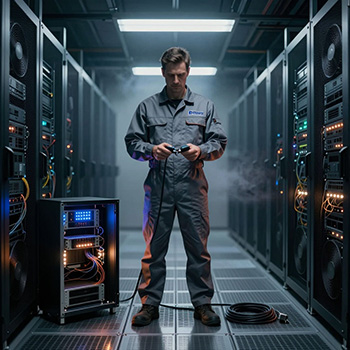
A data center's operations are supported not by a single specialist, but by an entire team, where each role is responsible for a specific section of the infrastructure. The stability of services, data security, and the speed of response to any incidents directly depend on the coordination of these people.
Key specialists in the data center and their tasks:
- Operations Engineers (on-duty engineers). Monitor the status of engineering systems 24/7, respond to emergencies, perform routine maintenance, and monitor temperature, power, and load.
- System Administrators. Responsible for the operation of servers and operating systems: configuration, updates, performance monitoring, and troubleshooting software failures.
- Network Engineers. Ensure the stable operation of the network infrastructure: routing, communication channels, load balancing, and network fault tolerance.
- Information Security Specialists. Control access to systems and data, implement security policies, and monitor and prevent threats.
- Power Supply and Cooling Engineers. Maintain UPS, generators, air conditioning systems, and monitor the proper operation of the entire engineering infrastructure.
- Technical Support (Remote Hands). Performs physical operations with equipment at client request: rebooting servers, replacing components, connecting cables.
- Security Service. Ensures physical security of the facility: access control, video surveillance, and visitor escort.
Large data centers may also employ infrastructure architects, automation and monitoring specialists, and customer service managers. This creates a multi-level team, with each function covering its own area, and together they ensure the smooth operation of the entire site.
Types of Data Centers and Reliability Levels
Data centers vary not only in scale but also in purpose, usage model, and reliability level. Understanding these differences is important, as they directly affect the tasks a particular center can perform and the availability guarantees it can provide.
Based on their purpose, several main types of data centers are commonly distinguished:
- Corporate (in-house) These are built and used by a single company for its own needs. They provide complete control over the infrastructure but require significant construction and maintenance costs.
- Commercial (colocation) These provide clients with space to house equipment within an existing infrastructure. The company leases racks or units, gaining access to reliable power, cooling, and communication channels.
- Cloud data centers. These are used by providers to provide virtual resources: servers, storage, and platforms. The client works with a service, not just hardware.
- Hyperscalers. These are the largest data centers owned by tech giants, designed to process massive amounts of data and serve millions of users.
There is a separate classification based on reliability level—the so-called Tier levels (I–IV), which reflect the degree of fault tolerance of the infrastructure:
- Tier I. Basic level without redundancy. Maintenance and failure downtime are acceptable.
- Tier II. Partial redundancy of key systems, but downtime is still possible.
- Tier III. Maintenance without shutdown, redundancy of key nodes, high availability.
- Tier IV. Maximum reliability with full redundancy (2N), fault tolerance, and virtually continuous operation even during emergencies.
The higher the Tier, the more complex and expensive the infrastructure, but the lower the risk of downtime. Ultimately, the choice of a specific data center type and reliability level is always determined by business objectives: from simple hosting of corporate services to mission-critical systems where even short-term unavailability is unacceptable.
Historical Background
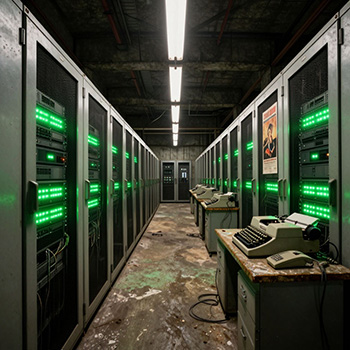
The history of data centers dates back to the era of the first electronic computers, when the very idea of centralized information processing was just beginning to emerge. One early example is the US Army's projects: in the 1940s and 1950s, computing systems such as ENIAC (1945) were housed in specially prepared rooms with controlled power and cooling. Even then, it became clear that computing technology requires an isolated and controlled environment, and its operation is impossible without an engineering infrastructure.
In the 1960s, large corporations began building their own data centers. IBM played a key role in this process, promoting the System/360 series mainframes (1964), which were installed in separate computer rooms. These rooms can be considered the direct precursors of modern data centers: they featured raised floors, air conditioning, and controlled access. At that time, data centers were used primarily for scientific computing, defense applications, and corporate accounting.
In the 1970s and 1980s, the development of telecommunications and the growth of business led to the scaling of such centers. For example, in the US, computing power for the banking and airline industries was actively developed. Systems like SABRE, created with the participation of IBM and American Airlines in the 1960s, had evolved into distributed infrastructures with fault-tolerance elements by the 1980s. At the same time, the first standards for redundant power supply and cooling began to emerge.
The turning point came in the 1990s and the spread of the internet. In 1995, Exodus Communications was one of the first companies to offer commercial server colocation services in Santa Clara. This effectively marked the transition from in-house corporate server rooms to professional data centers as a distinct industry. During this same period, specialized buildings designed for high loads and 24/7 operation began to appear.
In the 2000s, the industry was standardized: the Uptime Institute developed a Tier classification system (I–IV), which codified approaches to assessing data center reliability. At the same time, tech companies began building large distributed infrastructures. For example, since the early 2000s, Google has been actively developing its own global data centers optimized for processing search queries and cloud services.
The 2010s ushered in the era of hyperscale data centers. Amazon, Microsoft, and Google are building data center campuses around the world—for example, the Northern Virginia region has become a major hub, handling a significant portion of global internet traffic. At the same time, the emphasis is shifting toward energy efficiency, automation, and the use of renewable energy sources.
Thus, the journey from the military computing halls of the 1940s to today's global infrastructures took several decades. During this time, the data center has evolved from a supporting element of computing to a critical foundation of the digital economy, underpinning the entire modern internet and corporate IT systems.
Interesting Facts
The data center industry has seen many specific and illustrative cases where technology has gone beyond conventional solutions. Below are real-life examples, tied to companies, times, and locations, that illustrate the industry's evolution.
- Microsoft's Underwater Data Center (Project Natick). In 2018, the company deployed a sealed capsule containing servers off the coast of the Orkney Islands. The project demonstrated that equipment can operate reliably underwater for several years, using seawater for cooling and demonstrating a lower failure rate due to the isolated environment.
- Bahnhof's Underground Data Center in the Pionen Bunker. In Stockholm, one of the most famous data centers is located in a former nuclear shelter. The project gained notoriety not only for its high level of security but also for its unique design, which mimics a natural environment.
- Google's Seawater Cooling System in Hamina. The company converted a former paper mill into a data center and implemented a cooling system that draws water from the Baltic Sea. This is one of the most well-known examples of an energy-efficient approach in a cold climate.
- Google's Floating Data Center (Patent). In 2009, the company received a patent for placing data centers on barges off the coast to use seawater for cooling and flexibly scale its infrastructure. Despite the interest, the project has not seen widespread practical development.
- The largest hyperscale data centers from Amazon, Microsoft, and Google. Since the 2010s, these companies have been building data center campuses around the world, including the Northern Virginia region—the largest cluster serving a significant portion of the world's internet traffic.
- A data center that uses heat for the city—a project from Yandex in Mäntsälä (2015). The heat generated by the servers is directed to the central heating system, providing energy for local buildings.
- Colocation next to hydropower from Facebook in Luleå (2013). The data center was built in the northern region to take advantage of the cold climate and cheap electricity from hydroelectric power plants.
- Failed and closed projects. Over the years, companies have encountered difficulties when attempting to locate data centers in non-standard conditions—for example, Due to the difficulty of servicing remote sites or the high cost of modernization, which hindered the development of certain experimental areas.
These cases clearly demonstrate that data center development is not just about hardware, but also about finding the optimal environment: from the seabed to the Arctic regions. It is precisely such experiments that largely shape modern approaches to the efficiency, reliability, and scalability of data centers.