As data volumes grow and IT infrastructures become more complex, businesses are increasingly moving toward colocation of equipment in data centers, choosing the colocation model as an alternative to on-premises server rooms. Under these circumstances, understanding rack space in a data center becomes an important practical issue: companies need not simply to accommodate equipment, but to flexibly manage space, scale infrastructure, and adapt it to specific needs, including the use of their own racks and custom solutions.
Contents:
- What is space for server racks in a data center and what does it include?
- Don't confuse rack floor space with U (units) and rack rental
- Where to rent rack space in Moscow
- Advantages: When to choose rack space rental
- Restrictions and features of the format
- How to choose rack space in a data center
- FAQ
What is a rack floor space in a data center and what does it include?
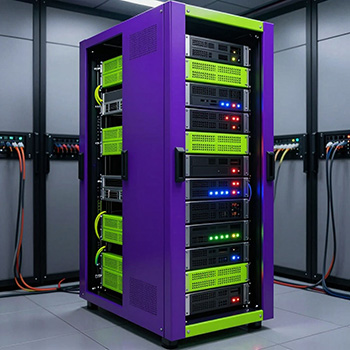
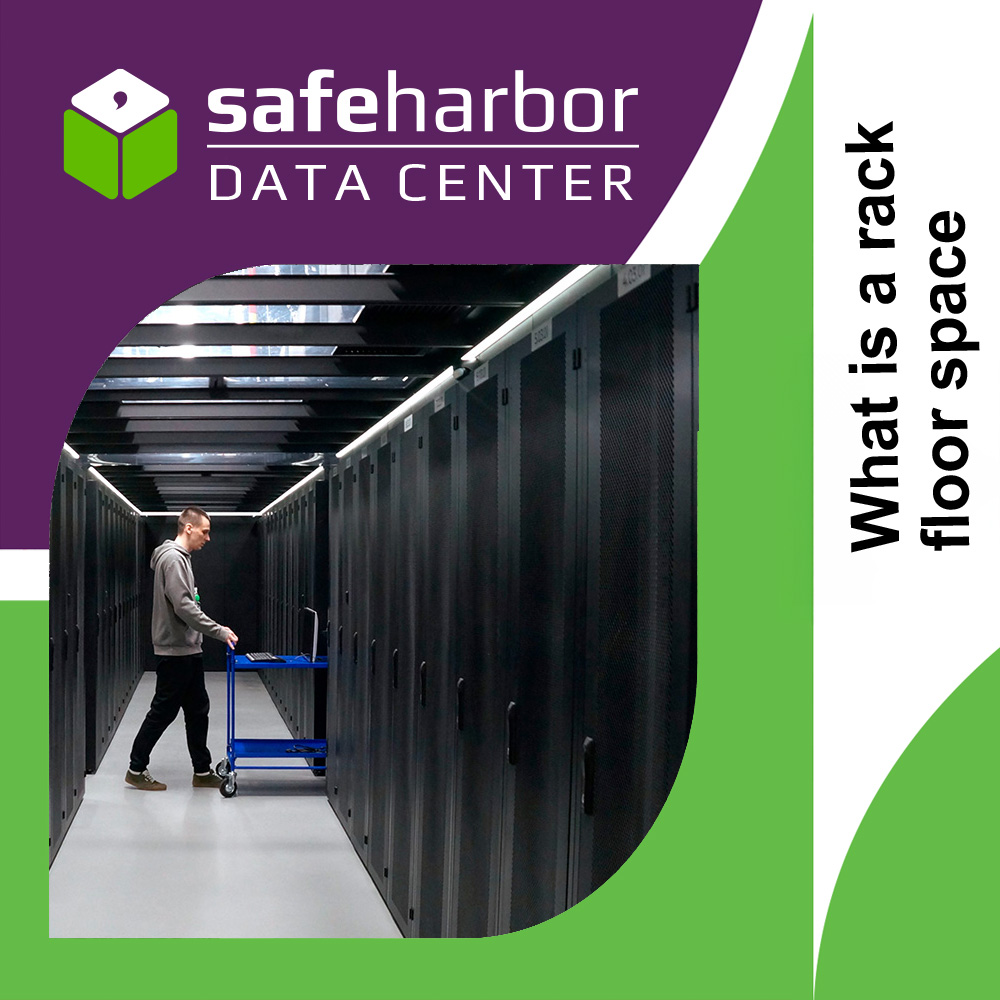
A rack floor space in a data center is the lease of physical space in a server room, where the client places their own rack of equipment and independently configures the internal infrastructure for their needs. This format assumes that the data center provides the space and basic resources, while the client completely controls the equipment configuration and placement.
Typically, a rack space includes the following components:
- Dedicated space — Server room space designed for the installation of one or more racks;
- Power connection — the ability to connect equipment to the data center's power grid with specified power parameters;
- Access to network infrastructure — connection to communication channels and the ability to integrate into the data center's telecommunications environment;
- Basic operating conditions — temperature control, physical protection, and access to the equipment maintenance room.
Thus, this option provides a company with the basis for deploying its own infrastructure while maintaining control over the equipment and its configuration while using the resources of a professional data center.
Don't confuse rack floor space with U (units) and rack rental
Colocation terminology often causes confusion, especially when it comes to this option. While all of these formats refer to equipment placement in a data center, they describe different levels of infrastructure and are not interchangeable.
- Rack floor space (server room space) is the physical area in a server room designated for the installation of the customer's own rack. Here, we are talking about the space, not the rack itself or its internal components.
- Rack rental is a format in which the customer uses a prefabricated data center rack. In this case, the infrastructure is partially prepared, and there is no need to install the rack itself. In this case, only your equipment will be inside.
- Units (U) (rack space) are a unit of measurement of internal rack space used to house equipment. They determine how many devices can be installed inside an existing cabinet, but have no bearing on space rental.
The key difference lies in the level of abstraction:
- a rack unit is a part of a room (area) that accommodates one rack;
- a rack is a standard-sized equipment (cabinet);
- a unit is a compartment/section of internal placement (space/section within a rack).
A common mistake is to perceive rack space as analogous to renting units or part of a rack. In practice, these are different approaches: renting a rack provides a ready-made solution for quick deployment, while rack space provides space for your own infrastructure with complete configuration freedom. This is why both options are variations of colocation, but they are geared toward different tasks and levels of client control.
Where to Rent Rack Space in Moscow

For companies that need to place their own racks in a professional data center infrastructure, renting rack space in Moscow should combine convenience, reliability, and flexibility. One such solution is Safeharbor Data Center, offering conditions tailored to practical business needs.
Key advantages of colocation at Safeharbor:
- Convenient location — Quick access to the site simplifies logistics and equipment maintenance;
- Thought-in-hand colocation — server rooms are prepared for the installation of client racks, taking into account power and connection requirements;
- Professional support — specialists assist at every stage: from colocation to daily operation;
- Flexible solutions — the ability to scale space, add new racks, and adapt the infrastructure to growing needs.
Colocating rack space in Safeharbor allows you to take advantage of the benefits of a data center while maintaining full control over your own infrastructure and its development.
Advantages: When to Choose Space for Rack Rental

Space for rack rental is chosen when a business wants to not just place equipment in a data center, but also maintain full control over its infrastructure and its configuration. This format is especially relevant for companies that already had their own server room and want to transfer the server without changes when migrating to a data center, as well as for projects with non-standard technical requirements.
When is rack floor space rental justified:
- Savings - If the company already has ready-made cabinets and a well-established infrastructure that need to be moved without reassembly and without overpaying for rent;
- Non-standard configurations — when using specific equipment that does not fit into standard solutions;
- Full customization — when you need to independently determine the placement, layout, and organization of all elements within the structure;
- Large-scale projects — when deploying multiple racks or entire zones, where flexible space management is important.
Key advantages of this approach:
- Flexibility — the ability to adapt the infrastructure to any task without the limitations of standard solutions;
- Control over equipment — Full control over placement, connections, and internal operating logic;
- Support for custom solutions — the ability to use unique architectures and specialized hardware;
- Scalability — gradual expansion of occupied space as the infrastructure grows.
Thus, this option becomes the optimal choice for businesses that value independence in infrastructure construction and the ability to implement complex technical scenarios without compromise.
Format Limitations and Features
Despite its flexibility and high level of control, the rack-based data center format has a number of features that are important to consider when choosing:
- Independent infrastructure organization — the client is responsible for installing their own structure, equipment placement, internal layout, and connection, which requires technical training and time;
- Responsibility for installation and connection — all assembly, cabling, and configuration work is performed by the client or contractors, without ready-made "out-of-the-box" solutions;
- Need for planning — it is important to consider power, cooling, and space requirements in advance to avoid limitations during future development;
- Additional resources — To purchase equipment, you may also need an in-house team of specialists or the involvement of external engineers.
Consequently, this option is suitable for those who are ready to independently manage the infrastructure and plan its architecture in advance, receiving maximum flexibility and independence in return.
How to Choose Rack Floor Space in a Data Center

Choosing rack floor space in a data center requires a practical approach, especially if a company already has its own metal structure with equipment and the task is limited to its relocation and subsequent operation. In this case, it is important to evaluate not only the site itself but also the conditions in which the equipment will operate.
- Power Supply and Capacity — Check the available capacity and the possibility of increasing it in advance. It is important that the parameters correspond to the actual consumption of the equipment without the risk of overload.
- Cooling — one of the key factors in placement. It is necessary to ensure that the data center cooling system can handle the heat generated by the equipment and ensure stable operation without overheating.
- Area and ease of placement — the space must allow for comfortable installation of the structure, as well as provide unrestricted access for maintenance.
- Access and logistics — the presence of freight elevators, convenient access roads, and a well-thought-out access plan to the server room significantly simplifies the installation and subsequent operation of the equipment.
- Reliable and high-speed internet — stable and fast access to the network is critical, so it is worth paying attention to the availability of operators and the quality of communication channels.
- Scalability — the ability to expand the area for additional racks will prevent relocation as the infrastructure grows.
- Rental cost — All other things being equal, it's important to find a balance between price and placement conditions: the optimal solution is an affordable price while maintaining the reliability and quality of the infrastructure.
Therefore, when choosing rack space, key attention should be paid to engineering conditions and ease of use, as these directly impact the stable operation of the installed equipment.
FAQ (Frequently Asked Questions)
1. What rack floor space is typically required for a single rack?
As a rule, one standard rack requires approximately 0.6-1 m² of space, taking into account clearances. The exact parameters depend on the data center requirements and the specific layout.
2. Is it possible to place multiple racks in a single rack space?
Yes, if the allocated space allows and the terms have been agreed upon with the data center. In this case, we are talking about an expanded space designed for multiple cabinets.
3. Are there any restrictions on the type of racks that can be installed?
Restrictions may be related to the dimensions, weight, and power consumption of the equipment. Before deployment, it's important to align the rack's specifications with the data center's requirements.
4. Can the rack's configuration be changed after installation?
Yes, but any changes require planning and, as a rule, approval from the data center. This is due to the need to consider power, cooling, and space requirements.
5. Is the rack space suitable for temporary equipment deployment?
Yes, this format can be used for temporary tasks, such as infrastructure migration or testing. However, lease terms and minimum lease periods should be clarified in advance.
Conclusion
A data center rack is a solution for those who want to maintain complete control over their infrastructure while leveraging the capabilities of a professional data center. This format is especially relevant for companies with existing racks and non-standard requirements, where flexibility, scalability, and independence in equipment organization are essential.
Choosing a data center requires careful consideration of the location, but with proper evaluation, it allows you to build a reliable and efficient IT infrastructure without the limitations of standard solutions.